Ketogenic diet for bipolar disorder: how good is the evidence?
One small Scottish trial, one randomised study and a growing set of case reports. What the ketogenic diet evidence in bipolar disorder does and does not show.
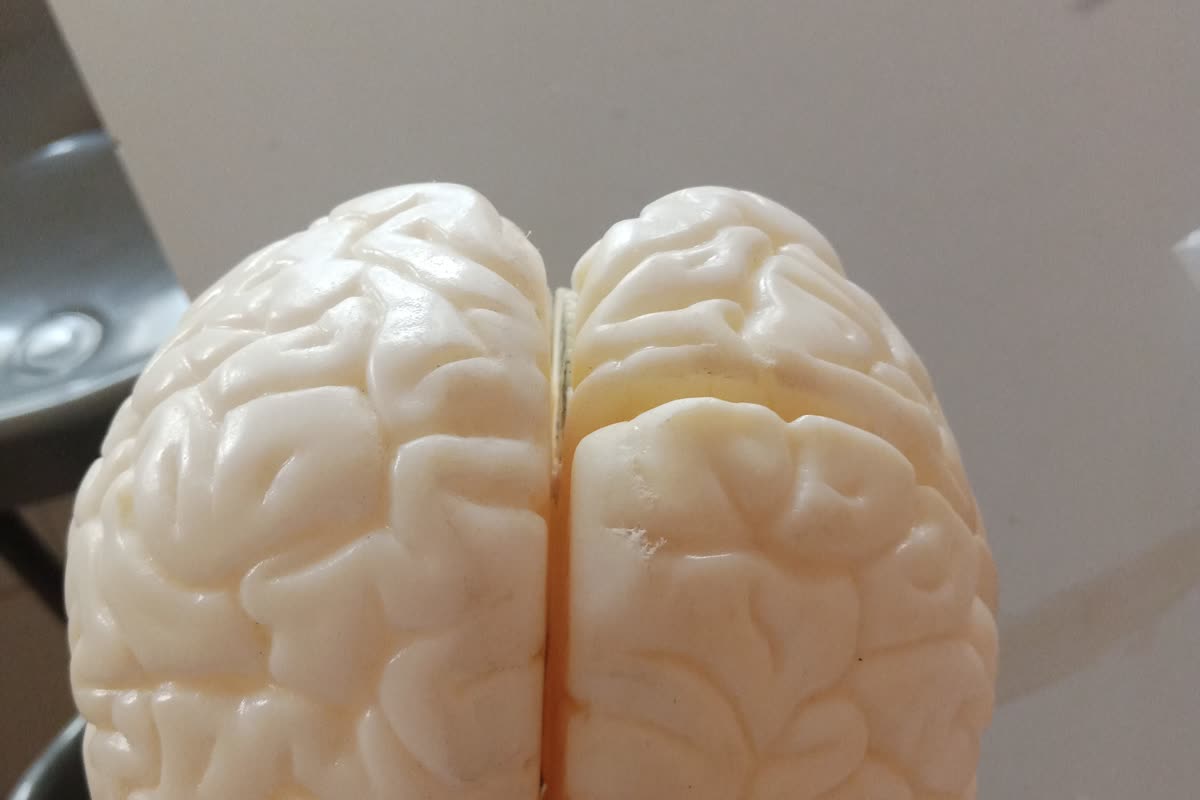
A ketogenic diet cut a brain chemical called glutamate by roughly a tenth in people with bipolar disorder, in the most detailed study yet published. The same study found no change in their mood scores. That is not a contradiction: everyone in it was well when they started.
What the Scottish study did
Twenty-seven adults were recruited through the charity Bipolar Scotland. Twenty-six started the diet and 20 finished it, over six to eight weeks, with their usual medication and psychiatric care continuing throughout [1].
The diet was 60 to 75% fat and 5 to 7% carbohydrate, with protein making up the rest. Participants aimed for blood ketones of 1 to 4 mmol/L: ketones are what the liver makes from fat when carbohydrate intake is low, and that range is the one used to define nutritional ketosis. They took glucose and ketone readings every day on a meter and reported them in.
The support was heavy. Each participant got a median of 505 minutes with a dietitian, about eight and a half hours, mostly as weekly remote consultations, and the diet was adjusted 32 times across the group. That level of input is unusual in a diet study, and it is a large part of why 20 people finished.
Everyone had been well for at least three months before starting. The paper declares that the first author has bipolar disorder and follows a ketogenic diet himself, and the feasibility results came out separately in 2023 [2].
Why the mood scores stayed flat
Three standard questionnaires were used. The Young Mania Rating Scale, which scores manic symptoms out of 60, went from 0 to 0 (n = 20). The Beck Depression Inventory went from 8.5 to 9 (n = 18). The Affective Lability Scale, which measures how quickly mood swings, went from 15 to 12.5 (n = 18). None of the changes was bigger than chance would explain, and one episode of hypomania was recorded during the study.
A mania score of zero at both ends is not a hidden benefit. It is what you get when you recruit people who are already well: the scale bottoms out at zero, so it cannot fall, and there is little room for improvement on the others. The study was built to find out whether people could stick to the diet, not whether it treated anything.
Seven of the 20 who finished chose to stay on it after the study ended.
What the brain scans found
Everyone had a type of MRI scan that measures the concentration of chemicals in small cubes of brain tissue, at the start and at week eight. Two of the three regions measured changed.
Glutamate is the brain's main excitatory chemical messenger, and it fell by about 12% in the anterior cingulate cortex and about 14% in the posterior cingulate cortex, both regions involved in mood regulation. In the third region, the right dorsolateral prefrontal cortex, nothing changed, and only 11 people had usable scans there. That voxel was a substitute for an initial basal ganglia target, dropped after test scans came out too noisy to read.
This is the part worth taking seriously. Raised glutamate is one of the more repeatable findings in brain scans of bipolar disorder, and it falls in people who respond to medication, to sleep deprivation or to light therapy. A diet pushing the same marker in the same direction is a possible mechanism, and mechanisms have been thin on the ground.
It is also 16 people in the anterior cingulate and 19 in the posterior cingulate, in an open study with no control group, with no correction for testing many chemicals at once. Two regions moved out of three. That is a lead to follow, not a result to rely on.
The daily mood diaries
Participants rated mood, energy, speed of thought, impulsivity and anxiety each day on a scale of 1 to 100. The first 12 sets of ratings had to be thrown out. People drew the line between normal and unwell in different places, so one person's 30 was another person's bad day, and the numbers could not be compared. The team added written descriptions of what each range meant for participants 13 to 27, and analysed those 14 only.
In that group, higher ketones went with slightly better mood and energy, and with slightly lower impulsivity and anxiety. The mood correlation was 0.21, which looks technical and means daily ketones explained about 4% of the variation in mood. It also lumps 14 people together across months of entries, so anyone who was both more ketotic and happier throughout produces a positive number on their own. The authors present it as a lead, not a finding.
Weight, blood pressure and cholesterol
People lost an average of 4.2 kg, their BMI fell by 1.5 points and their systolic blood pressure fell by 7.4 mmHg, all on unchanged medication. Seventy per cent of the group were overweight or obese at the start.
Cholesterol moved the other way. LDL cholesterol rose from 3.0 to 3.6 mmol/L and total cholesterol from 5.3 to 5.8 mmol/L, neither of them bigger than chance would explain, while HDL cholesterol, triglycerides and CRP stayed put. The authors set that against a meta-analysis of 41 trials in which low-carbohydrate diets raised LDL in people of normal weight but not in people with obesity, and say plainly that nobody knows whether a rise like this matters for the heart.
An average rise of 0.6 mmol/L with a p-value of 0.09 is not evidence of safety or of harm. It is a reason for an individual to have their own numbers checked at the start and again a few months in, rather than trusting an average.
The rest of the evidence
A single-arm pilot from Stanford, published in 2024, put 23 people with schizophrenia or bipolar disorder and existing metabolic problems on the diet for four months [3]. By the end, none of them met the criteria for metabolic syndrome, weight fell about 12% in those who stuck to it, and symptom severity improved by roughly a third on a clinician-rated scale, with the largest changes in the schizophrenia subgroup. There was no control group, so time, attention and being in a study all sit inside that number.
The first randomised trial came out in 2026 [4]. Fifty-eight people with schizophrenia-spectrum or bipolar I disorder were assigned to the diet or to diet as usual for one month, with an optional four-month extension. Against the usual-diet group, the diet group lost more weight and showed improvements in HbA1c and insulin resistance that landed right on the threshold for significance. Symptoms and scores on cognitive tests improved over four months on the diet, but that comparison was against the group's own starting point rather than against the other arm, which is the weaker of the two tests. Higher ketones tracked with better depressive symptoms.
Two case series are worth knowing. One followed seven outpatients with bipolar disorder and high cholesterol for three months and found mixed results on cardiometabolic markers, with lipids worsening in some people [5]. The other describes nine people who became hypomanic or manic within two months of starting a ketogenic diet, seven of whom had no history of bipolar disorder at all [6]. None needed hospital or new medication, but a diet that can tip someone into an elevated mood state is not a neutral intervention, and anyone with a bipolar diagnosis should have somebody watching for it.
In 2026, clinicians who use this treatment published a consensus statement with 33 agreed points covering who it might suit, how to monitor it and what to do about side effects [7].
The trials now running are larger than anything published so far. The University of Pittsburgh is running a 107-person brain imaging study in bipolar disorder, due to finish in January 2027 [8]. McLean Hospital is testing the diet in first-episode bipolar disorder, Mayo Clinic in bipolar depression, and UCLA in adolescents. All are still recruiting.
If you have bipolar disorder
Nothing here changes what NICE recommends, which is medication and psychological treatment, with diet nowhere in the guidance [9]. What the research supports is narrower: a ketogenic diet appears tolerable in a motivated group given weekly dietitian support, it may lower brain glutamate, and it may help with weight, blood pressure and insulin resistance.
If you want to try it, the conditions these studies used are a sensible minimum. Tell your psychiatrist and GP. Get blood tests including cholesterol and liver and kidney function first, and repeat them. Keep your medication exactly as it is while you find out whether you can sustain the diet. Have someone other than you watching your mood, because the reports of hypomania are real. Then treat it as an experiment with a review date rather than a cure.
The pilot described here was registered as ISRCTN61613198 [10]. The results worth waiting for next are the Pittsburgh scans.
Sources
- Campbell IH et al. A pilot study of a ketogenic diet in bipolar disorder: clinical, metabolic and magnetic resonance spectroscopy findings. BJPsych Open 2025;11(2):e34
- Needham N et al. Pilot study of a ketogenic diet in bipolar disorder. BJPsych Open 2023;9(6):e176
- Sethi S et al. Ketogenic diet intervention on metabolic and psychiatric health in bipolar and schizophrenia: a pilot trial. Psychiatry Research 2024;335:115866
- Abram S et al. Metabolic improvements with a ketogenic diet correlate with symptom improvement in psychosis: a randomized controlled trial. Schizophrenia Bulletin 2026;52(4)
- Schreel L et al. Case series: effects of a ketogenic diet on cardiometabolic health in seven outpatients with bipolar disorder. Frontiers in Nutrition 2025;12:1635489
- Palmer C et al. Emergence of hypomania and mania following initiation of a ketogenic diet: case series. Frontiers in Nutrition 2026;13:1815787
- Ede G et al. Awareness and best practices in using ketogenic therapy to treat serious mental illness: a modified Delphi consensus. Frontiers in Nutrition 2026;13:1749406
- NCT06081426: neurobiological mechanisms of a ketogenic diet in bipolar disorder, University of Pittsburgh
- NICE CG185: Bipolar disorder: assessment and management
- ISRCTN61613198: ketogenic diet in bipolar disorder pilot study
Disclaimer: Content published by BBBE Central is for educational, informational, and self-tracking purposes only and does not constitute medical advice. Always consult a qualified healthcare provider before making major dietary adjustments. See who should not follow this protocol.