Cost per 100g of protein in the UK
Shelf prices from one British supermarket in October 2026, converted into the price of the protein itself. Tinned tuna and whole chicken came in ahead of eggs.
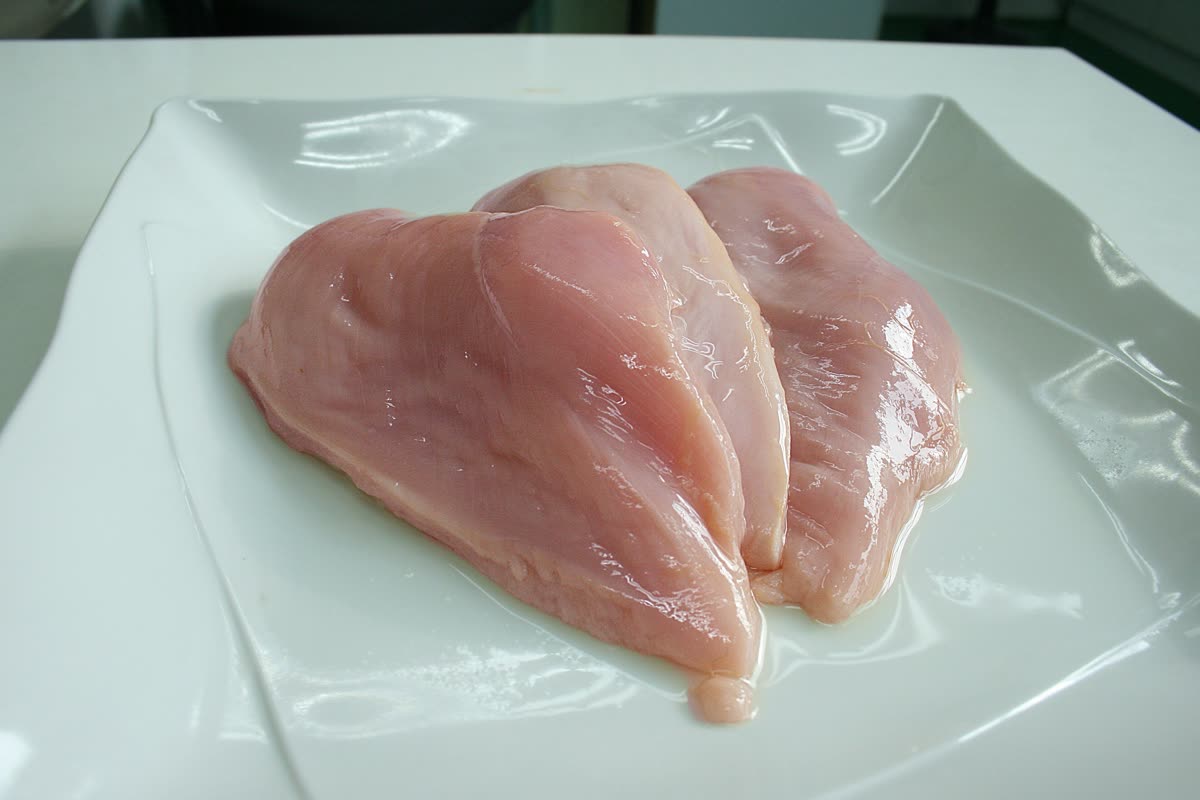
The cheapest protein on the shelf at Morrisons in October 2026 was not the eggs. A four-pack of tuna chunks in spring water worked out at £2.45 per 100g of protein. A whole 1.7kg chicken came to £2.61. A dozen large free range eggs finished fifth of the eight things I priced.
The number on the shelf edge is price per kilogram, and it cannot answer the question. Fat and water make up most of the weight in some cuts and almost none of it in others, so £/kg measures the wrong thing. What you want is what the protein costs, and that takes one division: the price of the pack, divided by the protein inside it.
The table
| What | Pack | £/kg as sold | Protein per 100g | £ per 100g protein |
|---|---|---|---|---|
| Tinned tuna, spring water | 4 x 145g, £2.49 | 6.10 | 24.9 | 2.45 |
| Whole chicken | 1.7kg, £5.50 | 3.24 | 12.4 | 2.61 |
| Mature cheddar | 400g, £2.95 | 7.38 | 25.4 | 2.90 |
| Pork shoulder joint | 1kg, £5.25 | 5.25 | 17.6 | 2.98 |
| Large free range eggs | 12, £3.30 | 4.90 | 12.6 | 3.89 |
| Beef mince | 1kg, £8.00 | 8.00 | 19.7 | 4.06 |
| Diced beef | 500g, £6.00 | 12.00 | 22.1 | 5.43 |
| Lamb shoulder | 900g, £12.60 | 14.00 | 17.6 | 7.95 |
Read down the £/kg column and cheddar looks like a luxury next to a whole chicken. Read down the last column and the gap is 29p. The chicken is cheap per kilo because about a third of that kilo is carcass, which you pay for and do not eat. Cheddar is 25.4% protein with nothing to throw away, and it carries more protein per kilo than the chicken does.
Tuna shows the same effect from the other direction. It is the middle of the £/kg column and the top of the protein column, because a drained tin is protein and water with 1g of fat per 100g. Nothing in the pack is waste and almost none of it is fat.
Where the numbers come from
Prices are Morrisons online, checked on 26 October 2026, for the ordinary own-brand product in each category. Where a category had a temporary offer I used the standard pack rather than the deal.
Protein figures are from the Composition of Foods Integrated Dataset, choosing the raw or as-sold rows so that the weight on the pack is the weight in the arithmetic. The chicken row is 18-298, meat and skin weighed with bone, at 12.4g of protein per 100g. The bird holds 210.8g of protein, and £5.50 divided by 210.8 and multiplied by 100 gives £2.61.
Two inputs are estimates rather than measurements, and both are worth stating.
Eggs: a large British egg is 63 to 73g in the shell. I used 63g, the bottom of the band, and the standard 89% edible proportion. That is 56g of egg and 7.1g of protein per egg, so twelve eggs hold 84.8g and cost £3.89 per 100g.
Tuna: a 145g tin drains to roughly 102g of fish. At 110g the figure improves to £2.27 per 100g of protein, and at 96g it worsens to £2.60. The tuna result is the one in the table that a different tin could move, and it stays in the same place in the ranking either way.
Why eggs are not the cheap option
People reach for eggs because they remember them being the budget protein. At £3.89 per 100g they are not badly priced, and they are beaten by a chicken, a pork shoulder and a block of cheddar.
What decides the ranking is how much of the kilo is protein. An egg is 77% water and 9% fat, which leaves 12.6g of protein in every 100g. Cheddar is 37% water and 35% fat and still carries 25.4g of protein per 100g, because there is very little water in it. You pay the same rate per kilo for water as you do for protein.
Tuna makes the same point from the other side. It is 74% water, almost exactly as wet as an egg, and it carries twice the protein, because there is 1g of fat in a drained tin. Water is the bigger diluter of the two. Fat is the one that moves a food to the bottom of this table.
Fat is the other half of the sum
The price of protein is one axis. Fat per 100g of protein is the other, and it changes the order for anyone keeping carbohydrate near zero and watching total intake.
- Tinned tuna: 4g of fat per 100g of protein
- Diced beef: 29g
- Eggs and whole chicken: 71g and 73g
- Beef mince: 82g
- Pork shoulder: 93g
- Lamb shoulder: 104g
- Mature cheddar: 137g
Cheddar is the cheapest way in this table to buy fat with protein attached, at £2.90 per 100g of protein and 137g of fat alongside it. That is an argument for it as a fat source, not as your main protein, unless you are deliberately running very high fat and moderate protein.
What to buy first
Whole chicken and pork shoulder as the base of the week, beef mince when it is on offer, tuna as the thing that lives in the cupboard, cheddar for fat, and lamb shoulder when there is a reason for it. That is a judgement call rather than a finding, and the numbers above will support a different order if your priorities differ.
The gap between the cheapest and the most expensive row is £5.50 per 100g of protein, a little over three times. On a kilo of protein a month that is £24.50 at the tuna end against £79.50 from lamb shoulder.
One shop, one week
These are one retailer's prices on one day. Prices move, and offers move them further. Morrisons had a blended beef and pork mince at £5.00/kg against an ordinary £7.50/kg while I was looking, and that pack is not the £8.00/kg beef mince in the table: a save-a-third ticket can put a different product at the top of the list without anything about the animal changing.
The ONS price indices are the way to check how far these have drifted before you use them to plan a month of shopping.
At the pork shoulder price, 105g of protein a day costs £3.13. From lamb shoulder it is £8.35.
Sources
Disclaimer: Content published by BBBE Central is for educational, informational, and self-tracking purposes only and does not constitute medical advice. Always consult a qualified healthcare provider before making major dietary adjustments. See who should not follow this protocol.